One Seam Flying Geese

Hello Creative Friends!

One of the things that I love about quilting is that there are multiple ways to piece, all you have to do is research, discover, practice, and then choose your favorite.  So if you are as obsessed as me about flying geese, I invite you to experiment with the One Seam Flying Geese technique when creating beautiful projects like the Flying Colors Quilt from the blooming Indigo & Aster Collection.


Pinterest-template


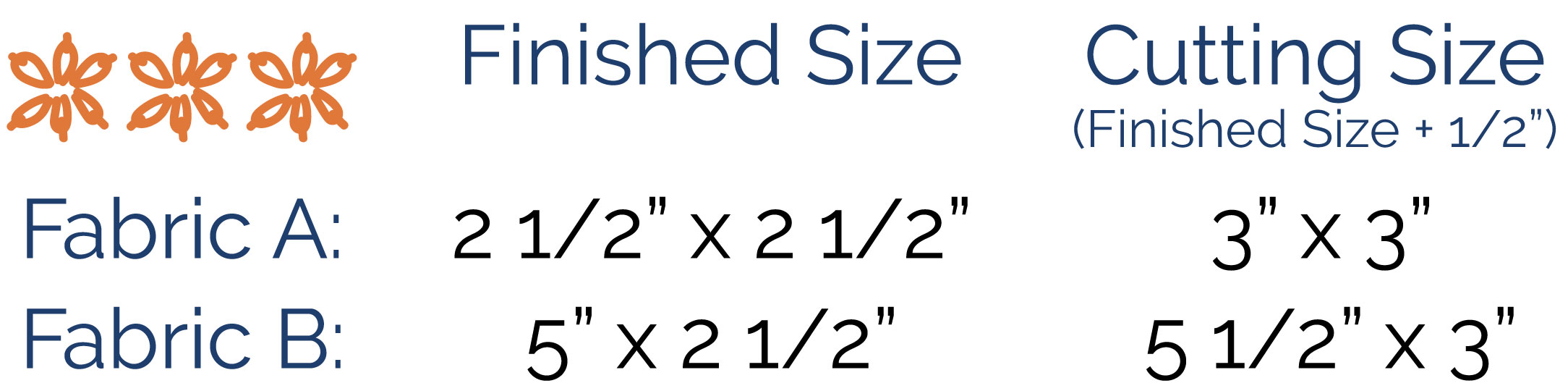
Let’s start by cutting! Since my finished size is 5” x 2 ½”, we need to cut two (2) 3” x 3” squares from fabric A and one (1) 5 ½” x 3” rectangle from fabric B.  However, if your desired finished size is different, just follow this diagram to figure out the size of the pieces you need to cut:
 

Images7


Images2


Take your cut pieces and align them:

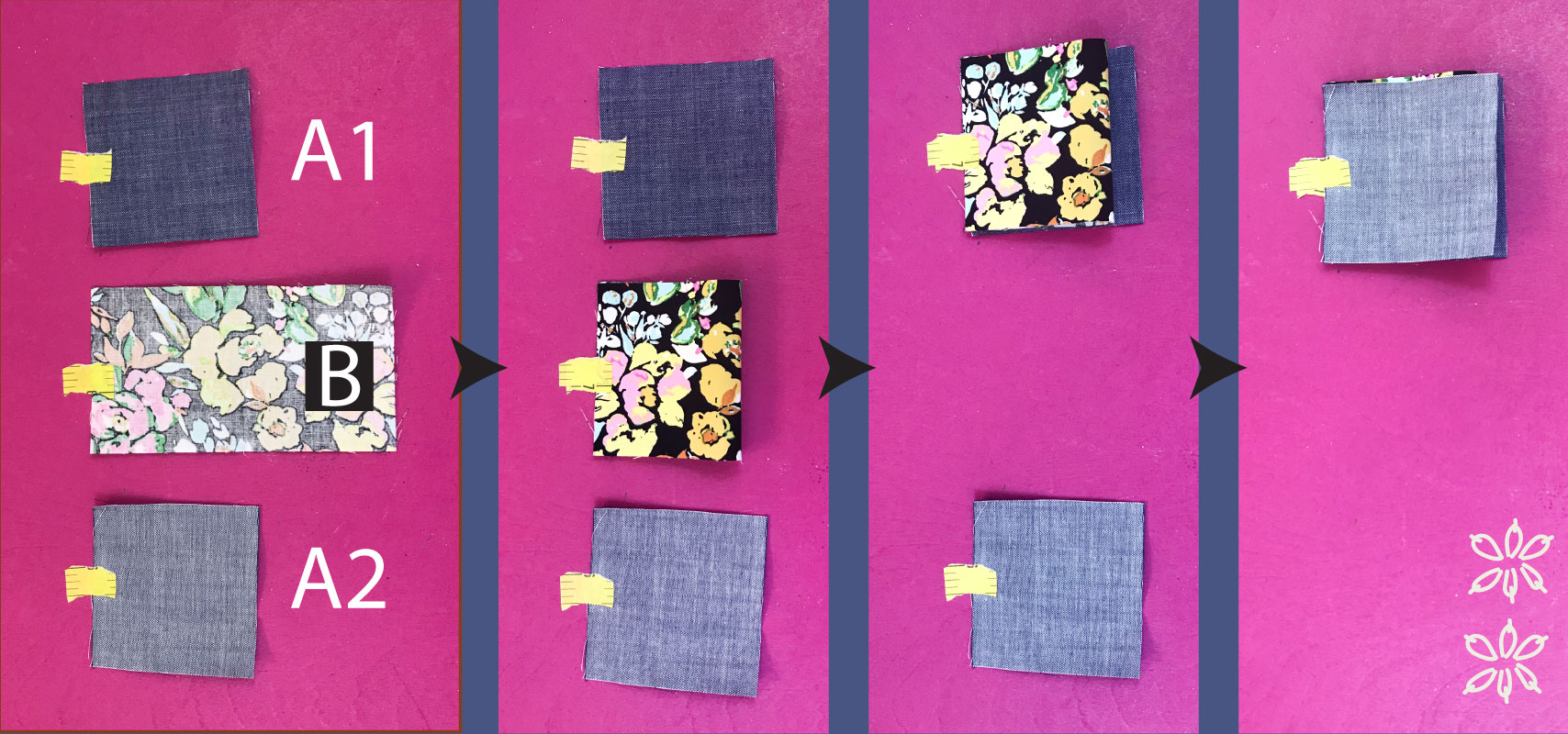
Place one square from fabric A facing up, the rectangle from fabric B facing down, and one square from fabric A facing down.

Fold the rectangle from fabric B towards the left side making sure the right side of the fabric is facing out.

Make a sandwich with all the pieces in the following order: A1BA2, lining them up to the left side:


Images


Now, get ready to stitch!

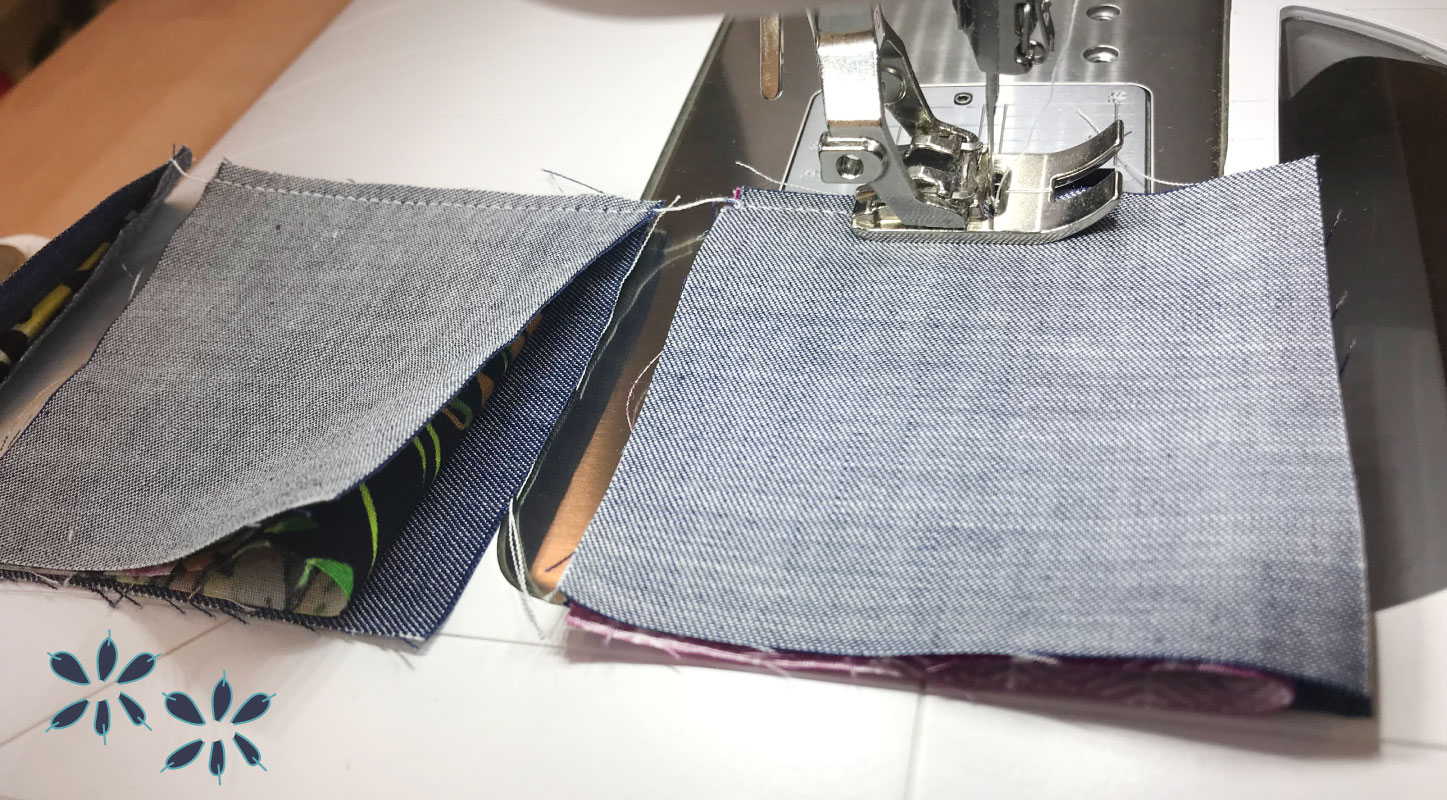
Keeping your pieces in the same position, stitch at 1/4” from the top edge of the fabric sandwich.
 

Images3


One of the great things about this method is that you can chain saw many flying geese at once. If your fabric has a directional print, make sure you place your fabric so the stitch goes on the upper part.

Images4

 
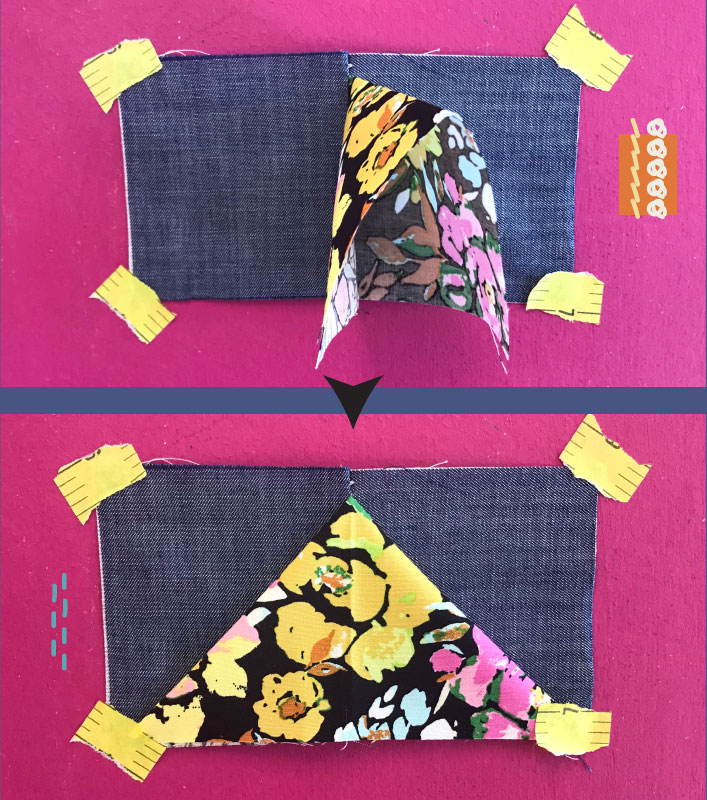
Now open and press!

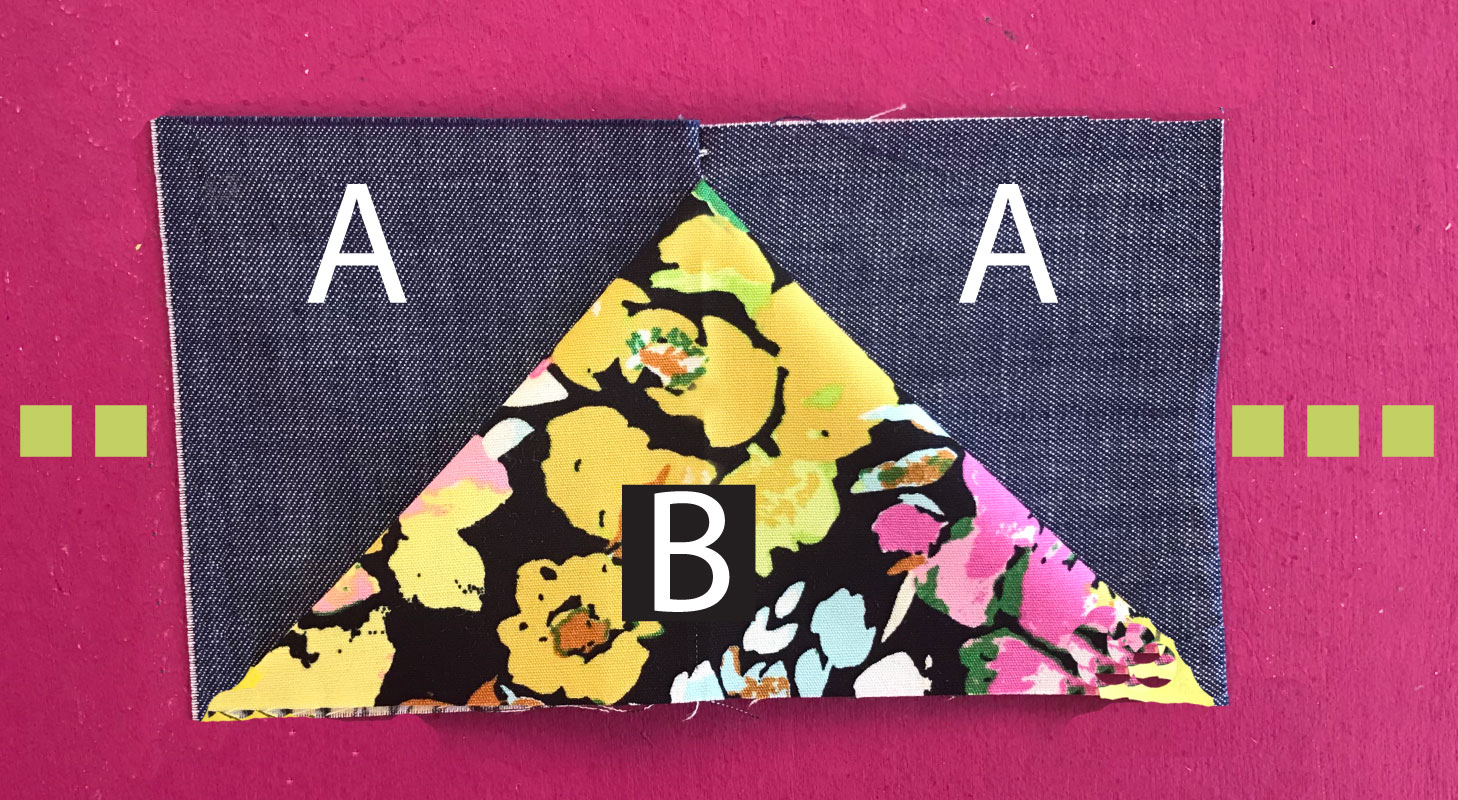
Open your pieces, and press them making sure the corners from fabric B are aligned with the bottom corners from fabric A.
 

Images6

Finally get ready to experiment on new projects and share them with me! I would love to see them and to know if you like this method, so far, this is my favorite, is it yours too?

Happy discovering and creating!

Laucara

21 responses to “One Seam Flying Geese”

  1. Barbara Opett Avatar
    Barbara Opett

    Your flying geese are raised by 3 layers of fabric; not a good idea at all, specially when you go to quilt it

    Like

  2. Laura Avatar

    Hi Barbara, that was my first thought when I read about the One Seam Flying Geese method too, but when I tried it, it worked really well, to the point that it became my favorite because depending on the way you quilt it, you get more dimension and texture from your piece.
    But like I said, its all about experimenting a choosing your favorite way. I would love to know which one is yours.

    Like

  3. NONNIE Avatar

    I first learned this block at my sewing bee back in the early 2000s and I later saw this block done by RICKY TIMS on the quilt show… Loved his hand dye fabric… I have made several quilts using this block … varying the size of the patches to get a different look… When I did quilt these blocks I started rolling back the geese and stitching them in a curve…. MY grandniece suggested I do that cause the kids kept squirreling food in the pockets and that lead to smeelly wash.
    Good tutorial.

    Like

  4. Laura Avatar

    Hi Nonnie!! I see what you mean! kind of like the cathedral window technique!! I would’ve never thought of that! I will definitively apply your idea to a future product for our lookbooks.
    If you have a picture of the quilted piece rolling back the edges of the geese, I would love to see it! please send it to marketing@artgalleryfabrics.com, or if you have instagram, use #artgalleryfabrics and I will find it :).

    Like

  5. Rosemary Bolton Avatar
    Rosemary Bolton

    I like this. I have a project in mind (found a photo of some cool wall paper in Real Simple magazine) and this might be the way to a better result.
    Thank you for sharing this. I am reading all of the comments above, but sometimes it is useful for what you need. Thank you and happy week-end

    Like

  6. Linda White Avatar
    Linda White

    My problem with this method is the waste of fabric. Granted it’s not much on one block but if you are making lots of them, a lot of fabric is not being used effectively. LOL, I’m poor and have to make the most of my fabric.

    Like

  7. Marlyn Anderson Avatar
    Marlyn Anderson

    I like this method for a couple reasons. Not dealing with any bias seams and you get those neat pockets.

    Like

  8. Colleen C. Yarnell Avatar
    Colleen C. Yarnell

    I made these for my Row by Row experience quilt 3 years ago and they were arranged big and small to look like fish

    Like

  9. Brenda King Avatar
    Brenda King

    Thanks for sharing this new technique. I always like to learn new ways to do things. It looks easier than the usual way! BrendaKing, Bend, Oregon

    Like

  10. Laura Avatar

    Hi Rosemary, I am so happy that you already have a project in mind for this technique! I love your comment about wall paper, because I am always looking for wall paper and floor tile images when designing new projects :).

    Like

  11. Laura Avatar

    Hi Linda, I definitely get your point! for that case the no waste method for making flying geese units is the best, you can view a tutorial about it in our Here Comes the Fun lookbook:
    http://liveartgalleryfabrics.com/here-comes-the-fun-lookbook/
    on pages 52 and 53.
    However if you ever have a small project in mind and some scraps laying around, please don’t hesitate to give this method a try ;)

    Like

  12. Laura Avatar

    Hi Marlyn, I would say that not dealing with bias seams is a huge plus, but to me those cute little pockets are the main reason why this method is my favorite <3 .

    Like

  13. Laura Avatar

    Hi Colleen! I would love to see that quilt, I cant picture the fish shape, however I know you saved a lot of time with this method. Do you always piece your flying geese using the same technique?

    Like

  14. Laura Avatar

    Hi Brenda! I love to hear that this new information for you! please give it a try, and if you get a chance let me know how you like it :)

    Like

  15. SUSAN Avatar
    SUSAN

    I think if you did a whole quilt like this, it would be very heavy and it’s a waste of fabric when you only have so much to work with.

    Like

  16. Laura Avatar

    Hi Susan, I understand your point, this method focuses more on using less time than on using less fabric. It’s all about learning new techniques and finding your favorite method :)

    Like

  17. JenP Avatar
    JenP

    Hi!
    Really like the time saving aspect of this method but have a few questions about the finished piece. Is the quilt noticeably heavier than normal? Especially on a large piece? And if the pockets are quilted shut is the quilt still quilt textured? Thanks!!

    Like

  18. JenP Avatar
    JenP

    *quite textured!

    Like

  19. Laura Avatar

    Hi JenP,
    I love the time saving aspect of this method too!
    The quilt will be heavier for sure but I don’t think it will be way heavier than if you use the traditional methods. We have made cathedral window quilts that require more layers of fabric and the quilts are still confortable and not super heavy.
    If you stitch to shut the pockets, it will still have texture. Just to be on the safe side, I would do a small test with batting and backing to see if you really like the look.
    I would love to hear from you with a feedback of your experience ;).

    Like

  20. MADELINE l NEWTON Avatar
    MADELINE l NEWTON

    fantastic love it and so glad to find the written version …thank you ..i am new to quilting so this helps to understand them better…

    Like

  21. Laucara Avatar

    Thank you Madelin,
    Im really glad you enjoyed it. Please try it and let me know what you think!

    Like

Leave a comment

We’re AGF

At Art Gallery Fabrics®, we aspire for the best, from creation to delivery with reliable quality, and top customer service. We believe strongly in the quality of the fabric that is transcended in our superior thread count and fine weave, our mills uphold sustainable printing methods and are OEKO-TEX certified 

Latest Lookbook

Let’s connect