The Prettiest and Strongest Seam: The Flat Felled Seam

Hello my fellow makers!

Today we will talk about the Flat Felled Seam, a seam that lays flat on the right and wrong sides of your project. It is famously known for its strength and beauty. You can find it in your daily life on the sides of your jeans, in men’s shirts, and even in outdoor gear like camping tents. Also, you can find it in a more sacred place like the Pojagi patchwork, a Korean artform that uses improvisational piecing joined by hand sewn flat felled seams. Pojagi pieces are used to wrap special presents, protect sacred writings, and even carry important possessions on a journey. Depending on the size it could be used as a table cloth or a curtain. Wrapping a gift in a Pojagi piece communicates respect towards the object and good will towards the recipient.

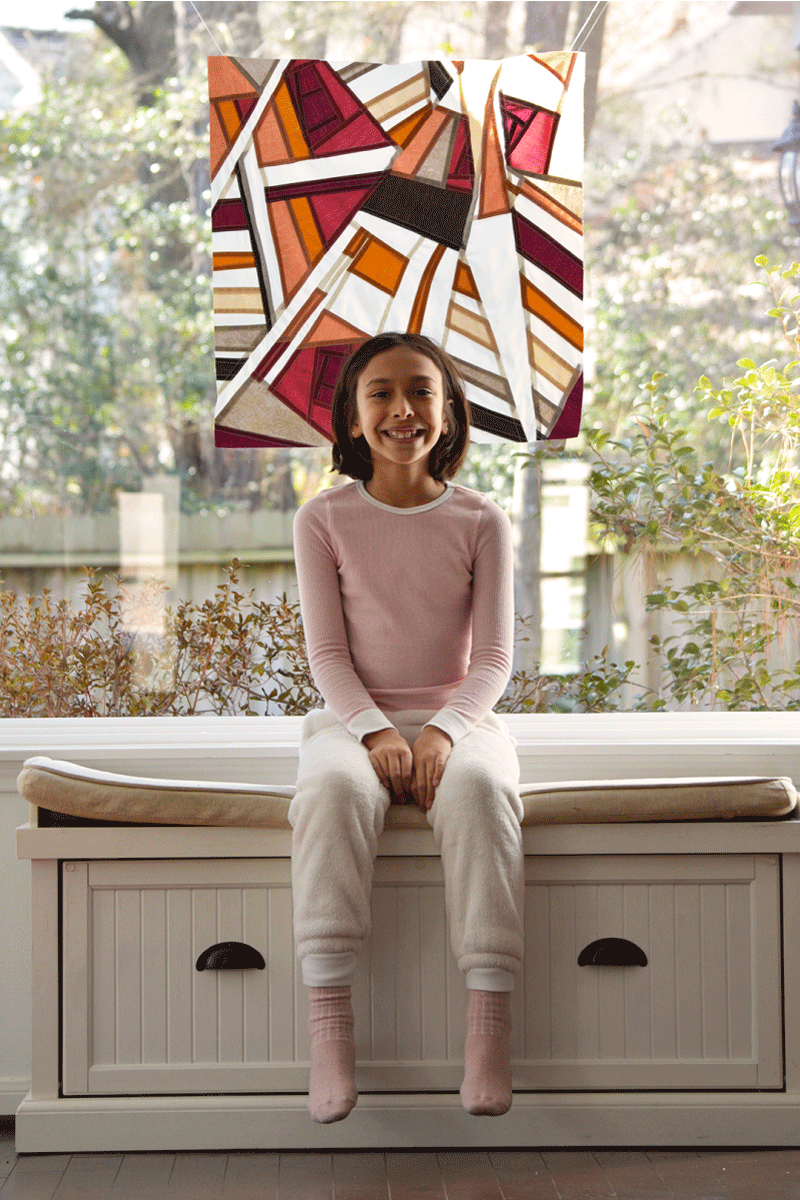
I decided to make a 24” x 24” machine sewn Pojagi inspired piece using Pure Solids, Floral Elements, Deco Stitch Elements, and Rayon. I love that it looks like stained glass in front of my window, and how it changes colors depending on how the light hits it as the sun moves during the day. The funniest part is that subconsciously I chose the colors that perfectly match Kobi, my furry assistant.


Pojagi Inspired Piece & Kobi


_Tutorial-Images-30


Top Left Corner_Tutorial-Images-06


Bottom Right Corner
_Tutorial-Images-07

Whole Piece

_Tutorial-Images-31


Lets begin:

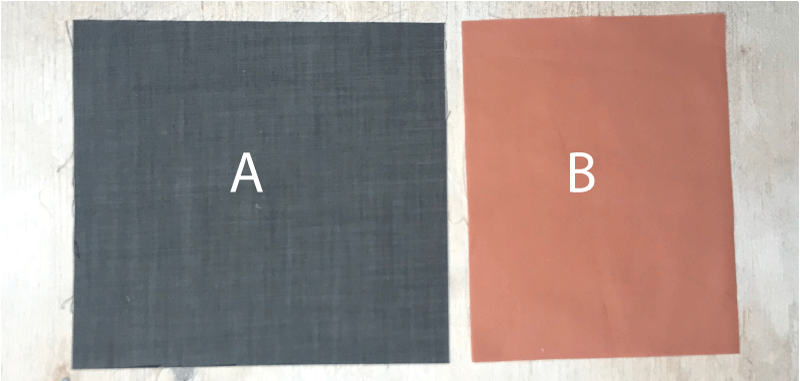
  • Lay your pieces flat on the table:

_Tutorial-Images-20

  • Align them wrong sides together and stitch at ⅝” from the edge:
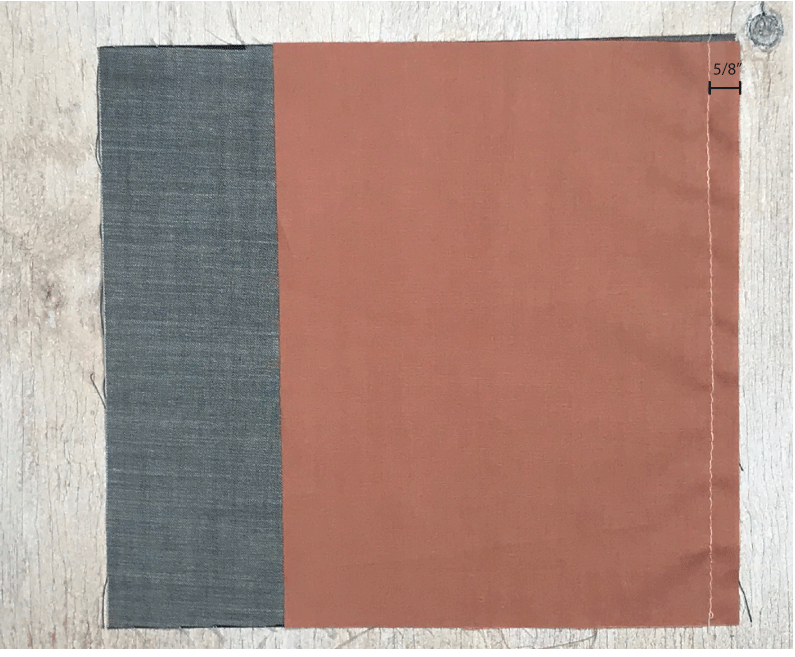
_Tutorial-Images-21

  • Trim one seam allowance (fabric B) to ¼” from the stitched line:

_Tutorial-Images-22

  • Open your fabric and press the seam allowances towards fabric A:

_Tutorial-Images-23

  • Fold and press the seam allowance from fabric A (⅝”) towards the stitch line covering the seam allowance from fabric B:

_Tutorial-Images-24

  • Press the seam allowances towards fabric B:
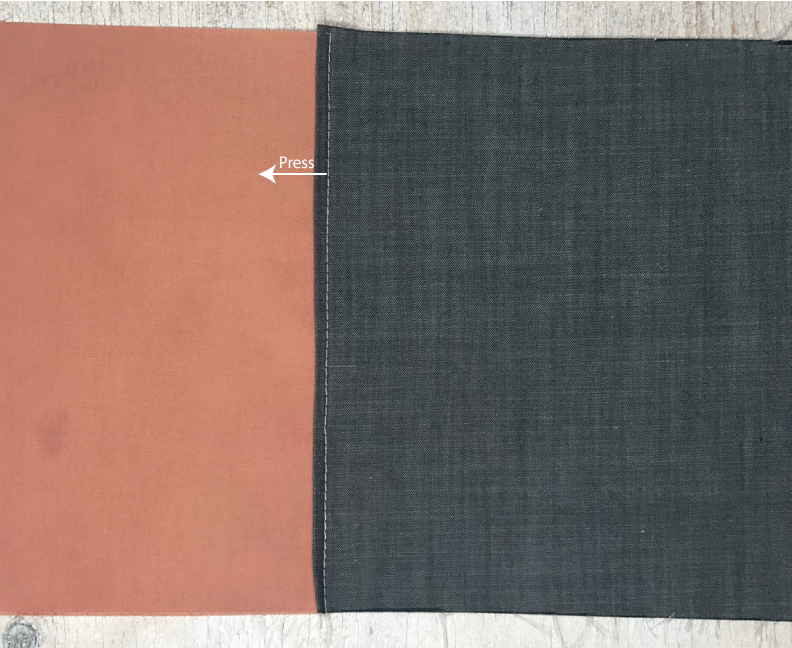
_Tutorial-Images-25

  • Edge-stitch the seam allowance in place:
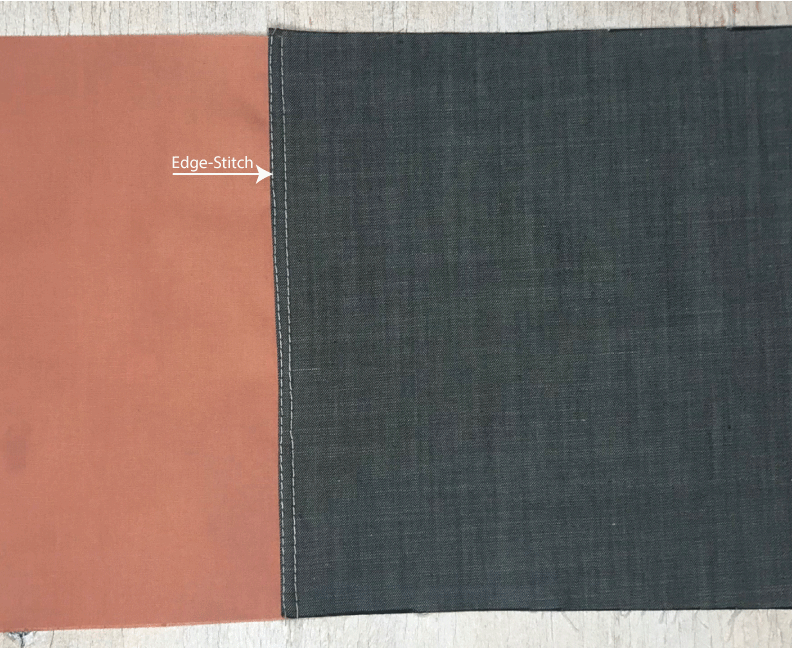
_Tutorial-Images-26

  • The wrong side of your seam should look like this:

_Tutorial-Images-27


Here I am sharing with you one last picture but this time is not with my furry assistant, but with the boss of the house who seems to approve and like my project ;) Once again my piece also matches my daughter's PJs. It seems we have a color trend in this house, now that I think about it my husband has red hair, but he wouldn't pose for my post lol.
 

_Tutorial-Images-33

Get on the Flat Felled Seam making bandwagon! Whether it is making cool jeans or exploring your Pojagi improvisational abilities. 

I hope you enjoyed this tutorial and please share your thoughts with me!


Laucara

28 responses to “The Prettiest and Strongest Seam: The Flat Felled Seam”

  1. K Avatar
    K

    This is the first time I’ve heard about this type of seam – thanks so much for this excellent how-to! I’ve been toying with the idea of making patchwork curtains for a while now, and feel like the last puzzle piece just clicked into place. I just wish my house were so color coordinated! 🤣

    Like

  2. Rosemary B Avatar
    Rosemary B

    Laucara, your work is beautiful Well done. This is always a good skill to learn. Your very artistic window display. Your daughter is beautiful

    Like

  3. Rosemary B Avatar
    Rosemary B

    Oh gosh, and your beautiful pup dog is also a lovie 😍

    Like

  4. Laucara Avatar

    HI K! Im so glad our timing is perfect! I hope you enjoy the process, Im sure your curtains will come out beautiful. Regarding the color, its funny how when you improvise, you discover your creative DNA by looking at your pieces together. Your subconscious materializes your style through your projects and its really rewarding when you visualize it.

    Like

  5. Laucara Avatar

    Thank you for your kind words Rosemary! I love this seam too, it is very functional and beautiful.

    Like

  6. Peggy D'Adamo Avatar
    Peggy D’Adamo

    Laucara
    I was taught long ago to do French seams on some garments but I’ve never done it in making quilts. This seems like a similar technique to me. If you are familiar with French seams, could you compare the two methods and , if possible give some pros and cons. Thanks so much for sharing. I love your work.

    Like

  7. Callie Avatar
    Callie

    With solids or batiks, how do you keep track of which side (seam) is up? I experimented with batiks and always got lost on which seam was which. They look different on each side of my project. Maybe it doesn’t matter?

    Like

  8. Laucara Avatar

    Hi Peggy, that is a great question,
    The main common thing between the French seam and the Flat Felled seam is that both have a clean look on the right and wrong sides of your project.
    The main differences are their strength and so their purpose:
    The French seam is mostly for garments made with fine and/or delicate fabrics that don’t have lining and you want a clean finish on the inside of you garment. In the industry most common way to clean the inside seams is with a serger or a merrow machine, but when you find a piece that is finished with a French seam, it makes it so much more special, well finished, and let just say … EXPENSIVE. The French seam is not ideal for seams that are going to be stretched or pulled apart often because it is delicate.
    The Flat Felled Seam is wider and has two parallel stitches on the right side of the seam. It is known for its strength so you will usually find it in Jeans, menswear, or outdoor gear like camping tents where the seams will withstand a lot of stress.
    I was very surprise to find out that this strong seam is used in the Pojagi patchwork because to me Pojagi is a very delicate art form with such a profound meaning, but the big difference is that a real Korean Pojagi is joined by hand, and that really takes the Flat Felled seam to the next level.
    I hope I answered your question, I am the kind of person who can over extend an answer, just ask my kids, lol.
    Something that I like to do is to go to fancy clothing boutiques to check how the clothes is finished, that way I get a lot of inspiration and ideas for my projects lol.

    Like

  9. Laucara Avatar

    Hi Callie,
    It doesn’t matter if you are taking improvisation to the next level, but if you can also control and decide. Here are the tips:
    First you need to make sure that from the beginning you align your fabrics WRONG sides together to make the first stitch, it is easy to make a mistake in this first step because our brain is automatically trained to align the fabrics RIGHT sides together for the regular seams.
    And then if you want a specific fabric to be the predominant fabric in the seam (Fabric A – black denim), cut to 1/4″ the seam of the fabric that you want to hide (Fabric B – cinnamon solid)
    I hope this answer your question ;)

    Like

  10. Lisa Z Avatar
    Lisa Z

    Thank you for your clear instructions!
    Curious how you finished the outside edges.
    thanks!

    Like

  11. Donna Avatar
    Donna

    Nice tutorial and a lovely piece. I’m still working on a long term pojagi curtain project (my first one) for the rare times I hand sew. You’re reminding me to pick it up again. Pojagi looks so amazing as a window curtain. This machine sewn version is a great option for a quicker finish. Next time!

    Like

  12. Laucara Avatar

    Hi Lisa, this piece doest have the edges finished. But a great way to finish them would be with a baby hem.

    Like

  13. Laucara Avatar

    HI Donna! that is such an amazing project! I admire so much hands-sewn projects, I bet is going to end up beautiful.
    Thank you for liking this tutorial!

    Like

  14. Sandy H Avatar
    Sandy H

    Thank you for a wonderful tutorial! I, also, thought of French Seams. As one who loves to learn, I greatly appreciate the “over answer” about how these techniques differ!!! I’m inspired to grive it a try. 😊

    Like

  15. Barbara Hewitt Avatar
    Barbara Hewitt

    This is wonderful. I haven’t been interested in making quilts with all the layers. I love the beautiful fabrics and often use them in dressmaking, but have thought how fun it would be just to use the beautiful fabrics for wall hangings. So with the flat felled seams that would work great. Thank you

    Like

  16. Laucara Avatar

    Hi Sandy! thank you for liking the tutorial and the mega answer ;). Please give it a try and let me know how do you like it.

    Like

  17. Laucara Avatar

    Hi Barbara, I am so happy you liked the tutorial and motivated you to use your fabrics in a different way.

    Like

  18. Ann Avatar
    Ann

    Thanks for sharing. I have been mulling over how to make a duvet cover with my scraps. Think this might be a great technique to try.

    Like

  19. Laucara Avatar

    Hi Ann! you are right, I didn’t think about a duvet cover, it would look so pretty with this technique too. Thanks for the idea :)

    Like

  20. George Marshal Avatar

    I love your ideas. I haven’t been interested in making quilts with all the layers. The multi colors in the image are fascinating. I prefer the flat felled seams that would work great. Thank you

    Like

  21. Laucara Avatar

    Hi George,
    Im glad you liked this tutorial, the colors, and that you are more interested in experimenting with quilts using the flat felled seam. The possibilities are endless.

    Like

  22. David Joe Avatar

    Wonderful article! We will be linking to this particularly great content on our site. Keep up the good writing.

    Like

  23. Laucara Avatar

    Thank you David Joe!

    Like

  24. Claudia Avatar
    Claudia

    Great tutorial! I want to try this method. I love your design. Did you make it as you went along or drew out a plan and did you use cottons? Thank you for sharing

    Like

  25. Laucara Avatar

    Thank you Claudia, please try it, you will love it. I did it as I went. I started by making and improvised set of strips and cut them in different directions to apply them in opposite corners of the piece, that way it has more contrast visually. The sew as you go part is what took me the longest time, I would observe the piece and experiment different placement every single time it was time to sew lol, and at the end it was worth it because I love the result.

    Like

  26. Kathy Garringer Avatar
    Kathy Garringer

    Big fan of pojagi. I made curtains for my front door. I do love the stained glass look.

    Like

  27. Laucara Avatar

    Thank you Kathy, Im sure your door looks amazing!

    Like

  28. Dee Avatar
    Dee

    Another significant difference is a flat felled seam is FLAT, with the raw edge encased and the seam sewn on top of the right side of the piece, encasing the raw edges. It finishes with the right side of the seamed fabric sewn down onto the right side of the piece. A French seam is not sewn flat, it’s a regular seam that goes to the inside of the piece with the raw edges encased within that seam. It’s my opinion that neither are appropriate for very curved seams, they work best on linear seams.

    Like

Leave a reply to Rosemary B Cancel reply

We’re AGF

At Art Gallery Fabrics®, we aspire for the best, from creation to delivery with reliable quality, and top customer service. We believe strongly in the quality of the fabric that is transcended in our superior thread count and fine weave, our mills uphold sustainable printing methods and are OEKO-TEX certified 

Latest Lookbook

Let’s connect